
cafeland.vn
Why Are Housing Prices in Ho Chi Minh City and Satellite Provinces Still High After Merger?
Saturday, 23 August 2025
from
HO CHI MINH CITY AND SATELLITE PROVINCES’ HOUSING PRICES POST MERGER: WHY THE PERSISTENT HEAT?
PRICES REMAIN STUBBORNLY HIGH
Despite the administrative boundary expansion of Ho Chi Minh City (HCMC), housing prices show no signs of cooling. Limited supply and soaring input costs continue to act as barriers, keeping prices elevated.
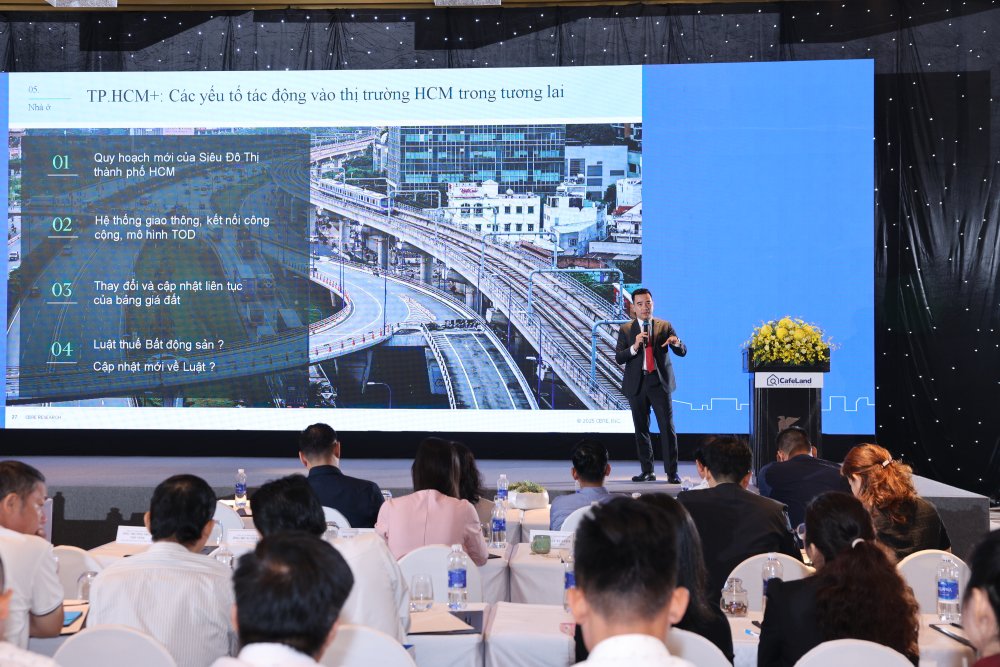
Speaking at the seminar "From HCMC to Satellite Provinces – New Opportunities for Real Estate" held on August 22, Mr. Vo Huynh Tuan Kiet, Director of Residential Marketing at CBRE Vietnam, noted that while the merger has opened new opportunities for real estate developers—such as easier land acquisition and improved infrastructure connectivity—property prices in HCMC remain resilient.
"The average primary price of apartments in HCMC reached VND 82 million per square meter in the first half of this year, a nearly 30% increase year on year. Most new projects in central HCMC are priced between VND 110–120 million per square meter, with very few below VND 100 million," Mr. Kiet reported.
ROOT CAUSES OF PERSISTENT HIGH PRICES
Multiple factors contribute to the sustained high prices, primarily low supply and rising input costs , which exert pressure on developers and prevent price adjustments.
According to CBRE statistics, only about 1,400 new units entered the market in the first half of 2025—the lowest in a decade. Notably, all new supply was concentrated in the luxury and high end segments , while mid range and affordable housing were nearly absent. This mismatch between supply and demand—where mass market needs remain unmet while speculative capital flows into scarce high end products—further prevents price corrections.
Alongside supply constraints, soaring input costs directly drive up housing prices:
Land costs: Many localities are set to release updated land price tables, leading to significant adjustments in compensation and land use fees, which constitute a major portion of project development expenses.
Construction costs: Rising material prices, labor wages, and project management expenses—fueled by inflation and VND/USD exchange rate fluctuations—add to financial burdens.
Logistics costs: Vietnam’s logistics expenses account for 16.5% of GDP , far higher than regional peers, increasing project development costs and pushing selling prices upward.
SATELLITE AREAS ESTABLISH NEW PRICE BENCHMARKS
Mr. Kiet emphasized that even with the merger of HCMC, Binh Duong, and Ba Ria Vung Tau—expanding land reserves and restructuring product segments—prices in both inner city and newly incorporated areas will struggle to decline. However, buyer and investor sentiment has become more open to properties in Binh Duong or outlying areas , where infrastructure connectivity continues to improve.
Post merger, HCMC is focusing on high end segments (luxury apartments, high end villas), while former Binh Duong develops mid range and affordable housing, and former Ba Ria Vung Tau prioritizes resort and logistics real estate . CBRE data shows that nearly 80% of new supply now comes from suburban areas and satellite provinces. Demand for both residential and investment purposes is shifting outward, driving up prices in these zones:
Binh Duong: +14% annual increase
Dong Nai: +15% annual increase
Long An: +21% annual increase
A key difference in the current phase is that buyers now demand higher quality in design, amenities, and construction, placing additional pressure on developers and pushing prices higher.
Mr. Su Ngoc Khuong, Senior Director of Investment at Savills Vietnam, noted that post merger real estate must leverage the competitive advantages of each area . However, significant shifts in product structure and segmentation will take 3–5 years , with minimal short term market fluctuations.
INFRASTRUCTURE: THE DECISIVE FACTOR
According to CBRE experts, connectivity infrastructure will determine the development trajectory of the new metropolis. Key projects such as:
Ring Road 3
Bien Hoa–Vung Tau Expressway
Expanded HCMC–Long Thanh–Dau Giay Expressway
Once completed, these will reduce travel times , stimulate urban sprawl, and form new growth poles. Additional factors—such as super city planning , revised land price tables , and potential new real estate tax policies —will also strongly influence the market in the coming years.
These elements will not only shape market trends but also help establish new price benchmarks across the expanded HCMC metropolitan area.
MARKET OUTLOOK: 2025–2027
CBRE forecasts that from now until 2027 :
HCMC apartment prices will continue rising by an average of 10% annually .
Former Long An areas could see increases of up to 19% per year .
This shift indicates that the real estate landscape is no longer confined to HCMC but is expanding into a greater metropolitan region , where infrastructure and land reserves will define positioning, and product quality will determine new value benchmarks.
SHORT TERM CHALLENGES AND STRUCTURAL SHIFTS
Scarce supply, rising input costs, and the outward migration trend are keeping HCMC’s real estate prices elevated in the short term. The market is undergoing strong restructuring :
HCMC retains its role as a high end center .
Satellite provinces become the main supply hubs .
In this context, rather than waiting for price declines, the key question for authorities and businesses is how to develop more mid range housing while leveraging infrastructure to redistribute populations rationally . Failure to do so will only widen the gap between housing prices and public income.
SEMINAR HIGHLIGHTS: "FROM HCMC TO SATELLITE PROVINCES – NEW REAL ESTATE OPPORTUNITIES"
Held on the morning of August 22 at JW Marriott Hotel & Suites Saigon, the seminar gathered economic, financial, and real estate experts to discuss post merger opportunities. The integration of HCMC, Binh Duong, and Ba Ria Vung Tau not only creates a super city and southern economic hub but also unlocks vast potential for satellite real estate markets. With trillion dong infrastructure projects underway, abundant land reserves, and competitive pricing, neighboring localities are becoming new investment hotspots.
Opinions from: EcoGreen Saigon Real Estate Research Team

Đang trống

Đang trống

Đang trống

Đang trống

Đang trống


